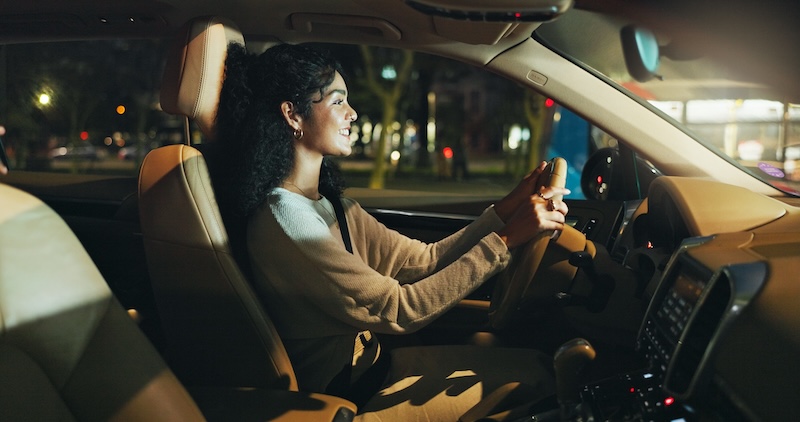
Driving at night can be nerve-wracking, especially if you’re a new driver. If you take certain precautions, then night driving is really no more dangerous than day driving.
In this post we’ll discuss how to stay safe while driving at night, whether you’re completely new to driving or you’ve extensive experience behind the wheel.
Essential Checks and Preparations Before Driving At Night
- You should regularly check that all of your lights are working like they should, including your rear lights. If you ever notice that any of your lights aren’t working, or if they appear dim or faulty in any way, get them fixed as soon as you can.
- Keep your car as clean as possible. At night, any marks on your windscreens could result in blinding glares from the lights of other vehicles.
- Always allow more time for any journeys you’ll take at night, as you’ll then be able to take your time, and you won’t feel the need to rush. Also plan your journeys in advance, and try to keep to major roads as much as possible. These will be better maintained, better lit, and much easier to navigate.
What Lights To Use When Driving at Night?
Many newer drivers wonder about the specific rules around what lights you should use, and when. The main thing to bear in mind is that it’s illegal to drive without your lights on at night. Beyond this, it’s a question of choosing between dipped headlights, main beams, and fog lights.
- When to use Dipped Headlights
Most of the time, you should use your dipped headlights. The law suggests that you should turn them on at least 30 minutes before sunset, and until 30 minutes before sunrise. - When to use Full Beam Headlights
You should only use your full beam headlights when it’s particularly dark, such as on a country road, and when there are no oncoming vehicles. - When to use fog lights
You should only use your fog lights when visibility is less than 100m to improve your visibility to others in poor conditions and to avoid dazzling them in good conditions.
For more, you can read our full guide to which lights to use at night, and our guide to when to use fog lights.
Are You Struggling To See When Driving At Night?
A major issue many drivers encounter when driving at night is the dazzling glare from oncoming vehicles. This issue has become more common in recent years, as many modern cars are fitted with LED headlights which can be a lot brighter than older cars’ headlights.
To help avoid being dazzled by headlines, you should:
- Keeping your windscreen clean can help you maintain your visibility at night
- Try to maintain an even speed
- Keep your distance from the car in front – that way, if you are temporarily dazzled by an oncoming vehicle, there’ll be less chance of a collision should you need to slow down or stop.
If you’re really struggling to cope with dazzling headlights, or if you’re having general visibility troubles when driving at night, talk to an optician. They can check for any underlying conditions, and they may be able to help you see more clearly when driving at night.
Never Drive Tired
Research suggests that driving tired could account for up to 20% of all road accidents. When you’re tired, it can take you longer to respond to hazards on the road. There’s also the danger that you’ll fall asleep at the wheel.
You may experience driver fatigue at any time of day, but it might be more likely when you’re driving at night.
If you’ll be driving a long distance after dark, aim to take regular breaks. You should stop at least once every two hours. If necessary, you could break your trip up with overnight stays, to avoid driving through the night.
Read our full guide to fighting driver fatigue.
Learning To Drive In The Dark
Driving after dark can be unnerving but as with most aspects of driving, once you’ve experienced it a few times you may realise that it’s no more demanding than driving at day.
If you’re learning to drive, it’s a good idea to get some practice in. Your driving instructor may schedule a couple of lessons to take place after dark, so that they can introduce you to certain additional precautions you should take when driving at night.
After this, you might also get some after dark driving practice in outside of your lessons. For this, you’ll need someone to supervise you, and you’ll need to sort out your own car insurance.
At Insure 2 Drive, we offer learner driver insurance to help first-time drivers get the driving practice they need. Get in touch for more information.